
The difference between parenting and child health
Parenting is a multi-dimensional, personalized parenting process that is carried out by the family around the growth of children, including educational guidance, habit cultivation, value shaping, etc. It is essentially "a collection of means to achieve growth goals"」; Children's health refers to the objective result that children are in good condition at three levels: physical, psychological, and social adaptability. It is the core bottom line that needs to be maintained during the parenting process, and is also one of the core goals of parenting. The two are related to "process selection" and "bottom line/goal". The boundaries overlap but the underlying logic and evaluation criteria are completely different and must not be confused.
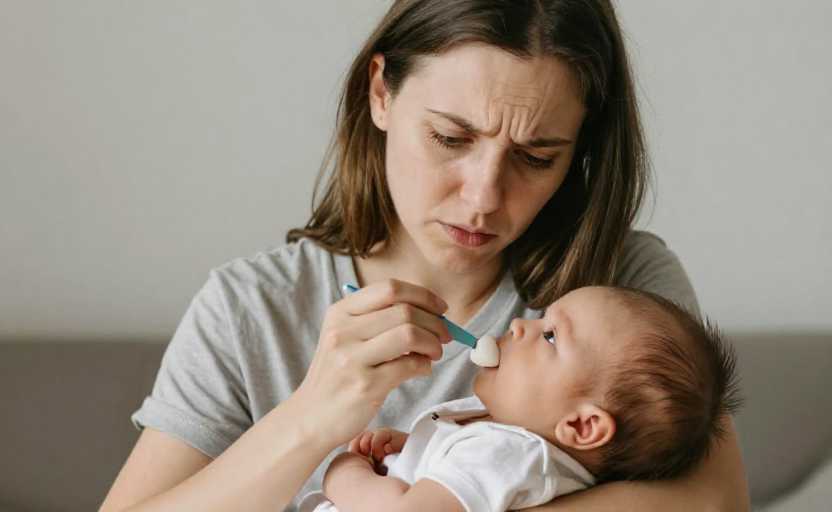
A while ago, a group of moms in the community argued about this matter. Sister Zhang said that she had enrolled her baby in equestrian, programming, and picture book classes, and her weekly schedule was so full that it was called "responsible parenting." Sister Li criticized her for not being able to guarantee that her baby would spend one hour outdoors every day. Her myopia was 200 degrees, but she still had the nerve to say that she valued her baby. The two of them each had their own reasons, but essentially the boundary between parenting and children's health was muddied.
To put it bluntly, the criteria for judging parenting are very personal and there is no absolute right or wrong. If you agree with Montessori education, you should give your child enough space for free exploration. If you value the sense of rules, you should teach him to be polite and orderly from an early age. If you even want to take the happy and free-range route, as long as the family reaches an agreement and the child can adapt, no one else can say anything. I know a couple who are engaged in college education. Their child had never taken any subject classes before elementary school. During the holidays, they took them camping in the mountains to identify plants. Relatives around them said that they were "delaying the child." As a result, after the child entered elementary school, his concentration and expressiveness were better than those of his peers. Even the teacher praised him for his curiosity. This is a typical parenting choice that suits the family. There is nothing to criticize.
But children's health is different. It has hard standards and does not tolerate any "I think". The WHO's child growth and development curves, annual vision screening thresholds for children under 6 years old, sleep duration requirements for different age groups, and even psychological social adaptability assessments are all objective rulers based on a large number of evidence-based studies. If you step outside the line, there will be problems. It has nothing to do with what parenting philosophy you believe in. My pediatrician friend told me about a case before. The parents believed a certain blogger's statement that "natural parenting does not require vitamin D supplements." The baby even developed chicken breast symptoms and thought it was "normal development." In the end, he went to the hospital for intervention and suffered a lot. This is putting the personalized choice of parenting above the objective standards of health, and putting the cart before the horse.
Interestingly, many people tend to confuse the two precisely because their boundaries overlap significantly. For example, when raising children, you guide your children to develop the habit of regular work and rest and not being picky about food. This is not only a good parenting practice, but also a solid foundation for children's health. But when there is a real conflict, the priority is immediately apparent: In order to let the child pass the tenth level of piano, a parent forced his child to practice for 4 hours a day without allowing him to rest in between. Six months later, the child's myopia not only increased by 300 degrees, but also was diagnosed with mild scoliosis. At this time, if you say "I am doing it for the future of the child," you are actually tacitly placing the staged goals of parenting above the bottom line of health, and essentially misunderstanding the relationship between the two.
There are indeed two diametrically opposed voices in the parenting circle today. One group is a supporter of "growth first". They think that in order to learn skills and gain competitiveness when you are young, it doesn't matter if you sacrifice a little bit of your health. You can just make up for it when you grow up.; The other group is those who are "health first". They believe that grades and talents are not important. It is enough that the children are happy and in good health, and there is no need to sign up for any interest classes. In fact, there is no need to go to extremes in these two views. There is no either/or opposition between the two: it is okay to want your child to learn a special skill. You can arrange to stand and move for 10 minutes every 40 minutes during piano rehearsal, ensure one hour outdoors every day, check your vision and spine regularly, and keep the red line of health. ; It’s okay if you want to keep your baby free. Don’t just play around and forget to give your baby regular physical examinations, cultivate hygiene habits, and stabilize the basic health. Whatever you choose is appropriate.
I have been doing children's health science popularization for 5 years, and I have seen too many parents who make mistakes. Most of the problems lie in "taking parenting arrangements that they think are right and automatically equating them with good health for their children." To put it bluntly, this matter is easy to understand: parenting is a personal choice of what kind of scenery you want to take your children to see and what kind of path you want to take, and children's health is the guardrail on this road. When you choose the scenery, you must first ensure that you don't fall into the ditch, right? Take a closer look and see if this is the truth.
Disclaimer:
1. This article is sourced from the Internet. All content represents the author's personal views only and does not reflect the stance of this website. The author shall be solely responsible for the content.
2. Part of the content on this website is compiled from the Internet. This website shall not be liable for any civil disputes, administrative penalties, or other losses arising from improper reprinting or citation.
3. If there is any infringing content or inappropriate material, please contact us to remove it immediately. Contact us at:
