Food allergy testing for children
The currently recognized gold standard for testing children for food allergy is "oral food challenge test under medical supervision combined with clinical symptom judgment." Food-specific IgG, serum total IgE or even skin prick test results alone cannot directly diagnose food allergy, let alone be used as a basis for long-term taboos.
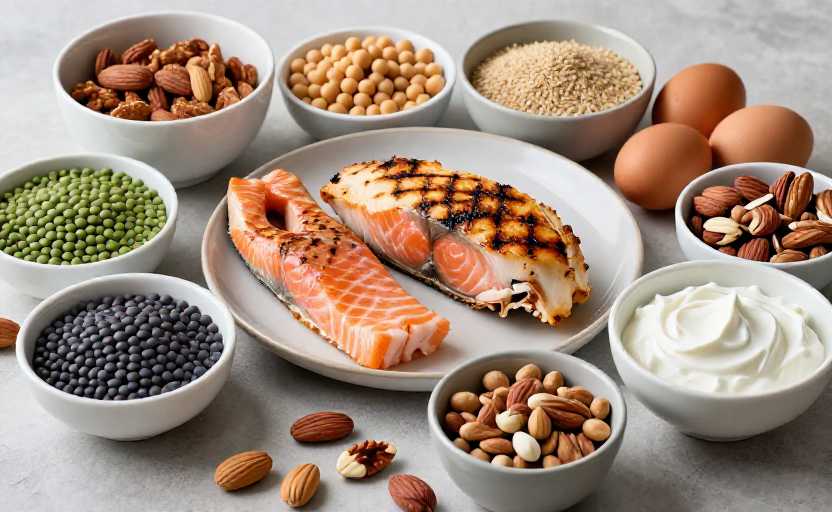
I just met a mother in the outpatient clinic a few days ago. She stood in front of my desk and cried while clutching three test reports from different hospitals. She said that her baby had just turned 1 year old and was found to be positive for IgG in 17 kinds of foods half a year ago. In the past six months, she dared to feed her baby cabbage and millet. Now during the physical examination, her height and weight are 3 centimeters shorter than her peers. I don’t know what to do. I encounter this situation almost every week. In the final analysis, everyone's cognitive bias towards allergy testing is too great. In addition, there are indeed differences in the views of different departments and different guidelines, so it is easy to get into trouble.
Let’s talk about the most controversial food-specific IgG test first. The current mainstream consensus in the allergology community is that an increase in this indicator only means that the baby has been exposed to such foods. It is a normal manifestation of the immune response and is not a sign of allergy at all. Unless the baby does have repeated symptoms of discomfort after eating the corresponding food, the results have no clinical reference value at all and are not recommended as a routine screening item for healthy babies. But I have also talked with my colleagues in the Department of Gastroenterology. For some children with functional gastrointestinal diseases who have unexplained chronic diarrhea and repeated abdominal pain, targeted avoidance of certain foods with particularly high IgG values does have a certain symptom relief effect. Therefore, this test is not completely useless, but its applicable scenarios are very narrow, and it should not be prescribed to all children suspected of allergies.
Let me tell you an interesting story. Last year, a parent brought his baby here and said that his baby's mouth turned red when he ate strawberries. All the allergen tests were negative. Later, when I asked, I found out that every time he gave his baby iced strawberries freshly taken out of the refrigerator, the baby was irritated by the ice. It was not an allergy at all. We all couldn't laugh or cry at that time.
In addition to IgG, which is often misunderstood, there are two other types of allergy screening commonly used in clinical practice. I usually prescribe the skin prick test to children with acute allergies who develop hives and swollen lips within half an hour of eating something. It is fast, with results available in 15 minutes, and it is cheap. However, you should not take anti-allergic drugs such as cetirizine and loratadine 3 days before the test, otherwise it will give a false negative. But this is just a preliminary screening. Previously, a baby had a positive milk test with a red lump the size of a soybean. However, when he went home and drank room-temperature milk, it was fine. The immune response of the skin does not exactly correspond to that of the gastrointestinal tract, and false positives are too common.
There is also a serum specific IgE test, which can be done by drawing blood without stopping the medication. It is relatively convenient and the result value is indeed positively correlated with the probability of allergy. For example, if the specific IgE of eggs exceeds 10IU/ml, more than 90% of babies will have allergic reactions after eating it. However, if it just exceeds the critical value of 0.35IU/ml, the probability of allergy is less than half. If the baby is not allowed to eat eggs directly, it is purely due to choking. My own child was also suspected of being allergic to milk when he was a child. He developed eczema all over his face. The specific IgE was measured to be just 0.7IU/ml, just above the critical value. I did not directly change him to deeply hydrolyzed milk powder. I heated the milk for 10 minutes and then gave him a small amount to drink. I slowly increased the amount. Later, he completely tolerated it. Now he can drink iced milk.
After all, it is the gold standard. The oral food challenge test has the highest accuracy. To put it bluntly, it directly simulates the scene of a baby eating normal food. You can increase the amount little by little to observe the reaction, and it is clear whether you are allergic. But this must be done in a hospital with emergency facilities. After all, severe allergies may induce anaphylactic shock. You must have epinephrine and oxygen inhalation equipment nearby before you dare to operate. Many parents find it troublesome and unwilling to do it. They think that a blood draw will be enough, but it is easy to make detours. For example, the mother who had been tabooing food for half a year later gave her baby a stimulus. Among the 17 "positive" foods, only mango and raw peanuts were really allergic, and the others could be eaten normally. After adjusting her diet for two months, her height caught up.
There is also an emerging allergen component test, which is already available in many tertiary hospitals. It is to check the specific protein components in the allergens. For example, Bos d8 in the component of milk is casein. If this is positive, there is a high probability that you are allergic to all dairy products. If it is only Bos If D1 is positive, it may just be an allergy to the whey protein in raw milk. It will be fine if you drink heated milk with denatured whey protein. It can help us judge more accurately whether we need to avoid dietary restrictions. However, the price is still relatively high now, and many places do not have medical insurance, so I generally do not recommend it routinely. I will only prescribe it when the judgment is unclear through routine testing.
In fact, allergy testing is never a "one-time test for life". Your baby's immune system is always developing. Many foods that you are allergic to in childhood, such as milk and eggs, can be tolerated by 70% by about 3 years old. Peanuts and seafood may be tolerated later, but it is not completely impossible. Don't treat the test report as an edict. It's better to observe your baby's reaction after eating. If you are really unsure, see an allergist or allergist at a regular hospital. Don’t try to give your baby random food options. It’s really unnecessary.
Disclaimer:
1. This article is sourced from the Internet. All content represents the author's personal views only and does not reflect the stance of this website. The author shall be solely responsible for the content.
2. Part of the content on this website is compiled from the Internet. This website shall not be liable for any civil disputes, administrative penalties, or other losses arising from improper reprinting or citation.
3. If there is any infringing content or inappropriate material, please contact us to remove it immediately. Contact us at: