
Do you add a in front of a balanced diet?
Both usages are in compliance with the standards. Whether to add it or not depends entirely on whether you use it as an abstract public health concept or as a specific and implementable diet plan. This logic is applicable whether you are writing a balanced diet in English or in situations where articles are used to be included in Chinese expressions.
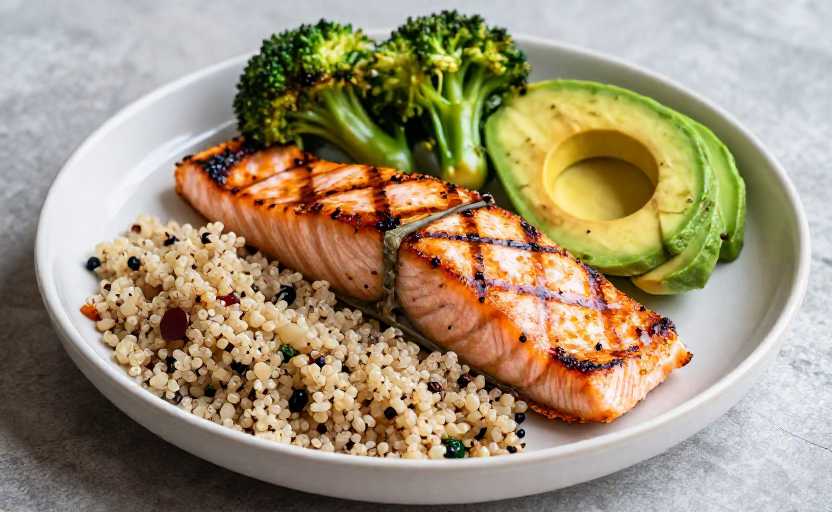
For example, when you go shopping with your best friend on the weekend, she is holding the order code of a milk tea shop and wondering whether to choose 30% sugar or 100% sugar. You roll your eyes and advise her, "Don't do it. A balanced diet will help you get rid of those pimples on your chin." At this time, you say It generally refers to the "dietary pattern with reasonable nutrition" that everyone defaults to. It is a general term for a large concept. Let alone adding a, it feels strange if you add the quantifier "a", it sounds like you are reciting blunt advertising lines.
But changing the scene is completely different. You stayed up late last week until your transaminases were high, so you went to the nutrition department to register. The doctor reviewed your physical examination report for a long time, gave you a list of three meals, and finally added, "Follow this for the next two months. This is a balanced diet suitable for your current metabolic state." Adding a at this time is not inconsistent at all. After all, you are referring to a specific set of dietary plans designed specifically for your situation. It is a single thing with clear boundaries. It is very logical to add an indefinite article.
Many grammatical conservatives insist that a must be added, and the reason is very good: diet itself is a countable noun. As long as it is preceded by an attributive modification and refers to a specific type of diet, the indefinite article must be added, without exception. Speaking of which, my English teacher taught me this way when I was in school. He even made "a balanced diet" a fixed combination for us to memorize. After all, when it comes to dealing with standardized tests, stability always comes first. A while ago, I helped my sister correct the mock test paper for her senior year in high school. She was deducted 0.5 points because she missed an a in the word "balanced diet" when writing the essay. She was 0.5 points short of being in the top 10 of her grade. She went home and felt aggrieved for a long time. I could only advise her that there are rules for the exam. We can just add it and it is over. There is no point in competing with the score.
But to be more serious, the usage without adding a is actually very common now. A while ago, I looked up information and read the popular science manuscripts on the WHO official website, and I saw the writing of "Balanced diet is key to preventing non-communicable diseases". Here, balanced diet is treated as an overall, abstract public health concept and treated as an uncountable noun, which is completely in line with the usage habits of contemporary English. I have seen some people arguing about this in an English enthusiast group before. One group said that they have taught high school English for 20 years and have never seen incorrect usage without adding a. The other group directly posted screenshots of the original texts of three sub-journals of "The Economist" and "Nature", and the other group stopped.
To put it bluntly, everyone is exposed to different usage scenarios, and no one is absolutely right or absolutely wrong.
In fact, this logic is similar to the usage of quantifiers in Chinese. You say "running is good for the heart and lungs." Running here refers to sports in general, and there is no need to add quantifiers at all.; But if you want to say "The coach taught me a way to run that puts less pressure on my knees last week", it is natural to add a quantifier, and the same principle applies to the usage of a.
If it is really used in daily life, there is no need to worry about it. No matter whether it is added or not, as long as the context is in place, everyone can understand it. If you are really not sure, there is a universal solution: Just add A honestly to the exam, and you will definitely not lose points. ; When writing about popular science and daily chatting, just follow the sense of language and say whatever you want. Don't be obsessed with grammatical rules.
Disclaimer:
1. This article is sourced from the Internet. All content represents the author's personal views only and does not reflect the stance of this website. The author shall be solely responsible for the content.
2. Part of the content on this website is compiled from the Internet. This website shall not be liable for any civil disputes, administrative penalties, or other losses arising from improper reprinting or citation.
3. If there is any infringing content or inappropriate material, please contact us to remove it immediately. Contact us at:
