Aerobic exercise burns fat or anaerobic exercise burns fat
Both aerobic and anaerobic can burn fat. There is no absolute distinction between the two, but the time window, long-term benefits and adaptation scenarios for fat burning are completely different. Choosing the right one is more than 10 times more efficient than blindly tangled.
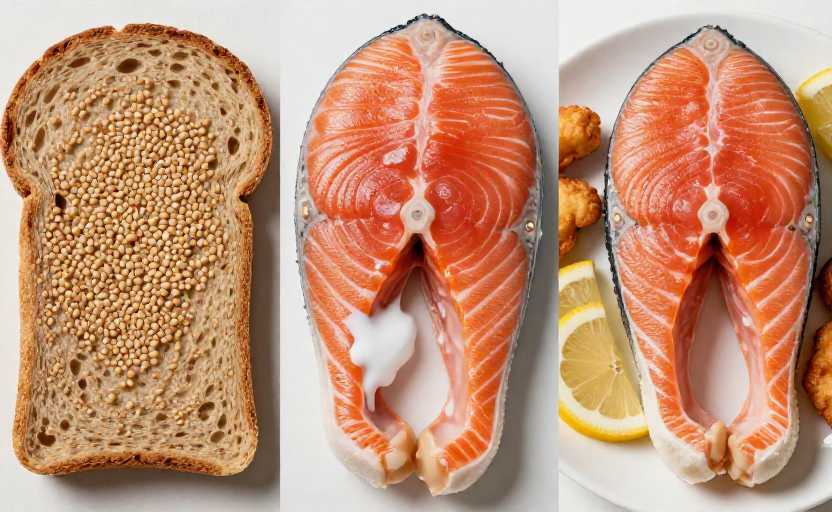
Let’s first talk about the most widely circulated “aerobic fat burning theory”. In fact, it is not groundless. From the basic logic of exercise energy supply, during steady-state aerobic exercise of medium and low intensity (that is, the level at which you can chat with people smoothly while exercising, such as jogging, brisk walking, swimming, and low-intensity jumping exercises), the energy supply ratio of fat can reach 50%-70%, which is equivalent to directly burning the fat on your body with every step you run. Two years ago, I took care of a female student who weighed 140 pounds. She had no exercise foundation at all, and her knees were not very good and she dared not run. So she walked briskly around the community for 40 minutes after get off work every day. She controlled her diet a little high in sugar. She actually lost 18 pounds in 2 months, and she felt much lighter. This kind of positive feedback that "exercise burns fat immediately and loses weight quickly" is really friendly to people who are just starting to lose weight. It is no wonder that aerobics has always been the first choice for novices to lose weight.
But in the past two years, another voice in the fitness circle has become louder and louder, saying that "anaerobic is the ultimate answer to burning fat", and supporters can also provide solid evidence. During anaerobic exercise (such as lifting irons, sprinting, heavy weight training, the kind of training until you can't speak complete sentences), the energy supply ratio of fat is indeed low, only 20%-30%. Most of the energy consumed is glycogen, but it can't help people have the "afterburn effect" Ah - it is what academic circles call EPOC excessive oxygen consumption after exercise. In human terms, it means that during the 24 to 72 hours after you finish strength training and slump on the sofa while scrolling through your phone, your body is still burning extra calories to repair muscles, and most of the energy supply comes from fat. And for every 1 kilogram of muscle mass increase, you can burn about 100 more calories every day while lying down, which is equivalent to automatically walking 2,000 more steps every day. Another male student of mine used to weigh 180 pounds and have a body fat of 30%. After running for half a month, his knees gave out. He switched to strength training three times a week and added 10 minutes of slow walking uphill at the end of each session. He only lost 5 pounds in 3 months, but lost 8 points of body fat. His waistline shrank by 12 centimeters. The jeans that he couldn't fit before were easily pulled up.
What’s interesting is that supporters on both sides have been arguing for so many years. In fact, they are both right, but they stand from different angles. People who say that aerobics are not good always point to "losing muscle after long-term aerobic exercise". Indeed, if you run for more than 90 minutes continuously each time and do not pay attention to protein supplements, your muscles will definitely be decomposed for energy supply. However, ordinary people will not lose muscle at all if they exercise for about 40 minutes at a time. People who say that anaerobic exercise is useless always insist on "less fat burning during exercise". They only count the immediate consumption of exercise and do not look at the additional fat burning in the following ten hours. To put it bluntly, it is a short-term account and not a long-term account.
I have been through this trap myself before. For the first half of the year, I focused on aerobics to lose weight. I ran 5 kilometers every day without hesitation. I lost 10 kilograms in 2 months and I was very happy. However, I did not exercise for half a month on a business trip and gained 6 kilograms back, which confused me. Later I found out that I lost muscle due to long-term aerobics alone, my basal metabolism dropped, and I gained weight after eating a little too much. Later, I added hip, leg and shoulder training three times a week. I reduced my running time from 50 minutes a day to 20 minutes each time. I did not add the total amount of exercise. I was stuck in the plateau period for more than a month. I lost 3 pounds in 2 weeks and my waist circumference was 4 centimeters smaller. Now even if I am lazy and do not exercise for half a month, I will not rebound as soon as I stop like before.
There is really no need to choose a specific team, what you choose depends entirely on your current needs. If you are new to exercise, have a low base and no foundation, and want to see your weight drop quickly and gain confidence, then it is right to start with low-intensity aerobics. The threshold is low and it is easy to persist. If you have been stuck in a plateau after losing weight for a while, or you originally wanted to have tighter lines and less sagging after losing weight, don’t hesitate to add strength training as it is much more effective than running for half an hour every day. If you can't spare much time for exercise every day, if you spend 30 minutes doing 20 minutes of iron lifting and 10 minutes of climbing, the fat burning efficiency will be much higher than if you just run for 30 minutes.
Oh, by the way, I forgot to mention, no matter what you choose, it’s all in vain if you can’t keep your mouth shut. After all, all the calories you consumed by running for 40 minutes can be recovered with a cup of full-sugar milk tea and fried chicken drumsticks. Don't tell me that you exercise just to eat freely. If that's the case, no amount of exercise can save you.
Don’t search online every day to find out which one is better at burning fat. Try aerobic training twice this week and strength training twice. Choose whichever one you can do without pain and if you are willing to continue next week. After all, in the final analysis, our exercise is just for eating happily and dressing well. There is no need to argue over a theory, right?
Disclaimer:
1. This article is sourced from the Internet. All content represents the author's personal views only and does not reflect the stance of this website. The author shall be solely responsible for the content.
2. Part of the content on this website is compiled from the Internet. This website shall not be liable for any civil disputes, administrative penalties, or other losses arising from improper reprinting or citation.
3. If there is any infringing content or inappropriate material, please contact us to remove it immediately. Contact us at: