
Short essay to relieve anxiety
The core of alleviating anxiety is never to "completely eliminate the anxiety", but to catch it first, and then use the smallest action you can do to draw your attention from "the bad thing that hasn't happened yet" back to "what you are doing now".
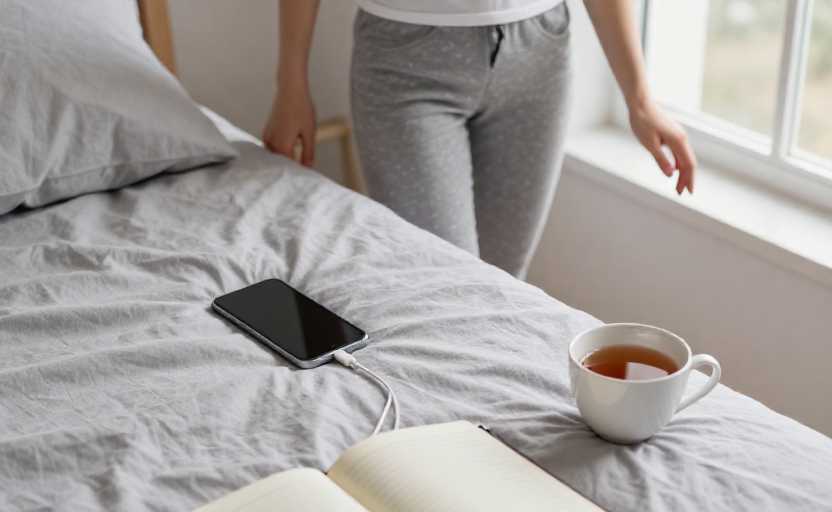
Last month, I had coffee with Xiao Xia, who works as an operator at an Internet company. She had just finished three days of pre-reviewing the big promotion plan, and her fingertips were still shaking when she sat down. She said that every time she closed her eyes for the past two days, her mind was filled with images of plans being cancelled, traffic plummeting, and quarterly awards being scrapped. Her heart skipped a beat when her cell phone beeped, and she felt panicked even when she drank water.
Regarding how to deal with this unexpected anxiety, different schools of psychology have actually always had different ideas. Researchers from the cognitive behavioral school will suggest that you first find a piece of paper and write down all the thoughts in your mind, distinguishing "facts" and "imaginations" one by one - like in Xiaoxia's case, the real facts are only "the plan has two sections left to change and there are still 3 days until submission." The remaining "boss will scold me" and "I want to be optimized" are all assumptions that have not happened. By dividing these two types of content, anxiety can be reduced by at least one-third. Practitioners of the mindfulness school often do not advocate making this kind of judgment. They recommend that you draw your attention back to your physical feelings: Are your palms sweaty now? Is your heart beating faster than usual? Don't blame yourself for "Why are you so panicked about such a useless thing?" Just count 10 breaths quietly, feel the cold air coming in from your nostrils, and then exhale with warm air. By the time you finish counting, the tightness that is holding your heart will probably loosen a little.
I've tried both methods myself. Last week, I was rushing to meet the deadline for an industry research report, and had three cross-department meetings scheduled at the same time. When I turned on the computer, I stared at the blank document and my mind went blank. I tried to write an anxiety list. The more I wrote, the more I felt that I would definitely not be able to finish it today. So I simply put down the pen and went to get a glass of ice-cold sparkling water. I put the ice-coated wall of the cup on my face and applied it for 10 seconds. I counted five breaths. I came back and typed three lines of titles, and I actually started writing them down. Don't tell me, there really is no need to worry about which method is "more correct". Use whichever method you can do at the moment. Write a list while your brain is still functioning. If your brain is already in a mess, make physiological adjustments first. No one requires you to remain "perfectly rational" when you are anxious.
Oh, by the way, don’t believe in the “10 things you must do to relieve anxiety” on the Internet, such as running 5 kilometers, traveling, or meditating for half an hour. When you are so panicked that you don’t even have the energy to change clothes and go out, forcing yourself to do these things will only make you more anxious because you “cannot achieve the goal.” The most useful actions I've tried are all costless little tricks: tearing a piece of waste paper into shreds, arranging the orange peels into small flowers when peeling an orange, or even blowing three breaths into an empty cup. As long as it can pull you out of the bad thoughts flying in your mind for 10 seconds, that's enough.
Of course, some people say that these are just small fights, and they are right. If this state of panic and restlessness lasts for more than two weeks, and you start to have insomnia, can't eat, lose interest in the things you particularly liked before, and even start to have unexplained physiological reactions such as dizziness and chest tightness, don't bear it, and don't think "I just think too much". Go to the psychiatric department of a regular hospital and take medication as prescribed by the doctor is the most effective way to intervene. These small methods we mentioned are only suitable for single-occurrence anxiety in daily life and are never a substitute for medical treatment.
Yesterday after get off work, I saw a little girl in school uniform squatting on the roadside crying. After crying for two minutes, I looked up and saw a few small blue-purple wildflowers blooming on the roadside. I took out my phone, took a photo, posted it on Moments, wiped my tears and left with my schoolbag on my back. In fact, everyone has been pressed to the ground by anxiety. There is no need to force yourself to get over it immediately. Squat for two minutes and pat a flower. Even if you feel dazed, just walk forward slowly. There is no need to run.
Disclaimer:
1. This article is sourced from the Internet. All content represents the author's personal views only and does not reflect the stance of this website. The author shall be solely responsible for the content.
2. Part of the content on this website is compiled from the Internet. This website shall not be liable for any civil disputes, administrative penalties, or other losses arising from improper reprinting or citation.
3. If there is any infringing content or inappropriate material, please contact us to remove it immediately. Contact us at:
