
Health check-up for the elderly
There is no need to skip it to save money and trouble, and there is no need to blindly pursue the "10,000 yuan luxury package" to check everything. Customized targeted screening once or twice a year based on your own basic diseases, living habits, and family history is the most cost-effective and most helpful choice for your health.
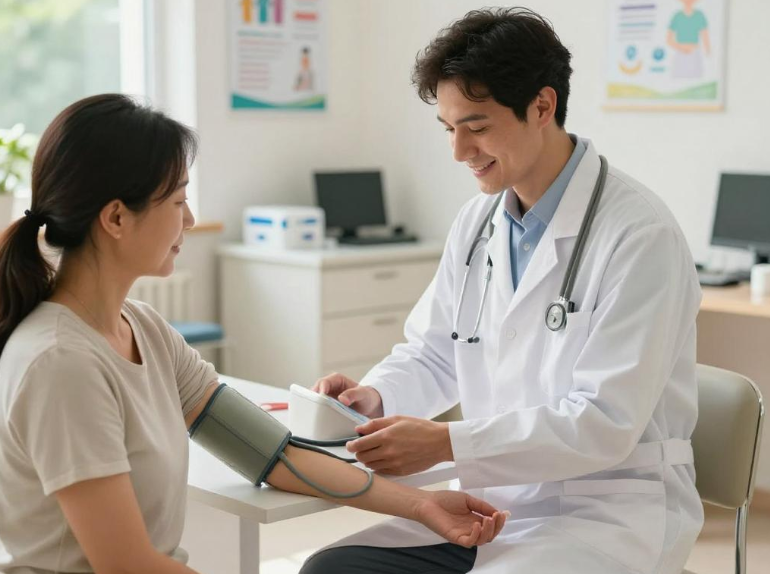
Last week I accompanied my 62-year-old uncle to the community health service center to get the physical examination report. He has smoked for 30 years, has chronic prostatitis and has a 3-year history of hypertension. Last year, his son took him for a high-end physical examination of 12,000 yuan. PET-CT, tumor susceptibility gene testing and other arrangements were arranged. In the end, except for 3mm solid lung nodules and prostate calcification, there were no problems. This year he refused to spend the unjust money. On the basis of the free elderly physical examination in the community, he only added low-dose lung CT, PSA (prostate specific antigen) and homocysteine, and spent a total of less than 300 yuan. The general practitioner who showed him the report laughed and said that he was a "smart person who knows how to do physical examinations." Those ridiculously expensive items were a waste of money for him, and he also suffered from extra radiation.
There are actually a lot of controversies about physical examinations for the elderly. The most controversial issue is whether PET-CT should be performed routinely. On the one hand, many commercial physical examination institutions tout it as a "cancer prevention tool", saying that one test can screen out all early cancers in the body. Many children grit their teeth and arrange it for their parents out of filial piety; but on the other hand, most doctors in clinical oncology and radiology departments are opposed to regular medical examinations for healthy elderly people. I used to talk to the three city doctors Dr. Li from the Radiology Department talked about it. He said that the radiation dose of PET-CT is equivalent to 10 ordinary CTs. If performed every year by healthy elderly people, it will increase the risk of radiation. Moreover, its sensitivity for early cancer screening of hollow organs such as gastric cancer and intestinal cancer is very low, and it is particularly prone to false positive results. Last year, he met a 70-year-old aunt. PET-CT showed that there were hypermetabolic lesions in the pancreas. The family was so frightened that they cried. As a result, they did an enhanced CT and a needle biopsy. It was found that the patient was recovering from ordinary pancreatitis, and they had suffered for half a month in vain. There are also "cancer risk gene tests" that are sold in many packages and cost several thousand. To be honest, unless there is a clear family history of hereditary tumors (for example, two consecutive generations of the family have breast cancer, Lynch syndrome-related bowel cancer), the test results have no clinical significance at all - if you are said to be at high risk, you will be anxious every day, and if you are said to be at low risk, you may just eat and drink without paying attention, which is purely IQ tax.
There is another point that has been quarreling for a long time: Is the free physical examination provided by the community to the elderly over 65 years old enough? Some people say that free products are not good, and checking them is useless. Others say that they are completely sufficient and there is no need to spend extra money. In fact, this really depends on the individual. If the elderly are usually in good health, do not have chronic diseases such as high blood pressure and diabetes, and do not have bad habits of smoking or drinking, and no one in the family has had malignant tumors, then the free basic projects in the community (blood pressure, blood sugar, blood lipids, hematuria and stool routine, electrocardiogram, abdominal B-ultrasound, and chest X-ray) are really enough, and they only need to be checked once a year. But if you have underlying diseases, you need to add more targeted items. Don’t be too troublesome: if you have type 2 diabetes, you need to check glycated hemoglobin, urine microalbumin and fundus to see if the blood sugar is stable in the past three months and whether there is any damage to the kidneys or eyes; if you have high blood pressure, check homocysteine, cervical cancer, etc. Arterial ultrasound can detect the risk of stroke in advance; those with a history of hepatitis B and C can have alpha-fetoprotein and liver B-ultrasound checked every year to keep an early eye on the risk of liver cancer; smokers of 20 to 30 years can do a low-dose spiral CT every year, which is more than 10 times more sensitive than a chest X-ray to detect lung cancer. Don’t take it seriously. Uncle Wang downstairs has been smoking for 40 years. Before, he only had chest X-rays every year. Last year, he was diagnosed with lung cancer that was already in the middle stage. If he had done low-dose CT three or four years earlier, he wouldn’t have had to suffer the consequences of chemotherapy.
There is another pitfall that many people have stepped on, which is the preparation before the physical examination. Don't listen to people saying that "the physical examination requires fasting and no food." It means that you have to stop even the medicines you usually take, especially antihypertensive drugs, hypoglycemic drugs, and antiplatelet drugs. If you stop for a meal, your blood pressure and blood sugar will soar. Not only will the measured results be inaccurate, but you may also be in danger. Last month, there was an old man in our community. He didn't even take antihypertensive medicine on an empty stomach for a physical examination. After the blood was drawn, he fainted when he stood up. He hit his head and had three stitches. It was so unworthy. If you are really not sure whether you can take medicine, call the staff at the physical examination center in advance, it only takes one sentence.
Oh yes, there is also the interpretation of the physical examination report. Don’t panic when you see the arrows, and don’t listen to the salespeople in the physical examination center to fool you into buying health products or conditioning packages. It is best to take the report to a doctor who you usually see and who understands your physical condition. For example, if you have been adjusting your blood pressure at a community general practitioner, then go to him. He knows what your usual basal blood pressure is and what medicines you take, so it is much more accurate than just looking for an unknown doctor to interpret it. The blood lipids in my uncle's report last time had an upward arrow. The person at the physical examination center said that he needed to take lipid-lowering drugs because of his high blood lipids. But he went to see his general practitioner, who said that the antihypertensive drugs he had taken recently would slightly increase his blood lipids, and the blood lipids were not high enough. He just needed to adjust his diet, and there was no need to take medicine at all. If he followed the salesman's advice and ate indiscriminately, it would harm his liver.
To put it bluntly, the more expensive the physical examination is, the better, nor is it the more items the better. It is just like buying shoes. The one that fits your feet is the most comfortable. Spending the least money to find the most important problems is better than anything else.
Disclaimer:
1. This article is sourced from the Internet. All content represents the author's personal views only and does not reflect the stance of this website. The author shall be solely responsible for the content.
2. Part of the content on this website is compiled from the Internet. This website shall not be liable for any civil disputes, administrative penalties, or other losses arising from improper reprinting or citation.
3. If there is any infringing content or inappropriate material, please contact us to remove it immediately. Contact us at:
